How to Stop Fruit Flies in an Indoor Worm Bin for Good
If you want to stop fruit flies in a worm bin, start by treating them as a symptom, not the main problem. Fruit flies show up when your bin is offering them exactly what they want: exposed food, moisture, warmth, and easy access. That does not mean your worms are doomed or your whole setup is dirty. It usually means the bin is a little too wet, the food is too available, or you are feeding in a way that gives the flies a head start.
Here’s the thing: fruit flies can reproduce fast enough to make a normal bin feel disgusting in just a few days. One piece of exposed melon rind or a pocket of wet scraps near the top can turn into a breeding site. Indoor compost pests are mostly opportunists. They do not need a huge mess. They need a crack in your routine. Once you fix the conditions that favor them, the population drops hard. The goal is not a heroic one-time cleanup. It is changing the bin so fruit flies stop finding it attractive.
Bury food properly and stop feeding like you’re setting out a buffet
The fastest improvement usually comes from one basic change: bury every scrap under a thick layer of bedding. Not tucked in. Buried. At least two to three inches deep, then covered again with dry shredded cardboard, paper, or coco coir if you use it. Fruit flies love exposed sugars and soft produce. Worms do not care whether the food sits on top where flies can find it or under bedding where only the worms and microbes can reach it. So give the worms the advantage.
Also, feed less than you think. A lot of apartment vermicomposting hygiene problems come from enthusiasm. People add more food before the last batch is mostly broken down, then wonder why the bin smells sweet and buggy. If you still recognize last week’s avocado peel, hold off. Smaller feedings in one corner work better than spreading scraps everywhere. Rotate the feeding zone so one area works while the rest of the bin stays relatively calm. And if fruit flies are already active, skip fruit scraps for a week or two. Stick with less tempting materials like coffee grounds, tea leaves, crushed eggshells, and small amounts of non-sugary vegetable trimmings.
Dry bedding is your best weapon against indoor compost pests
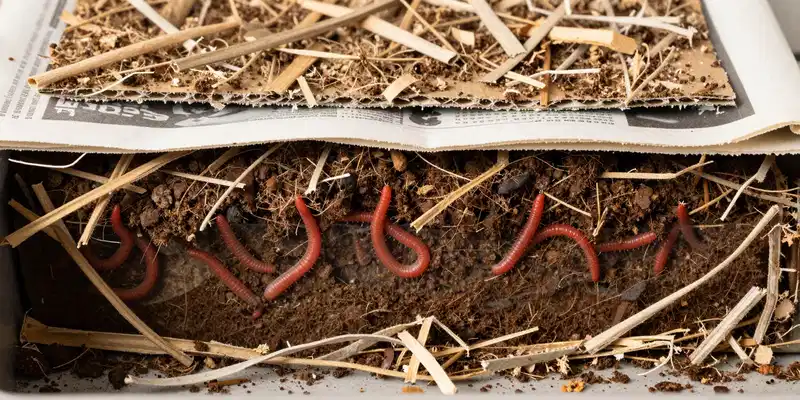
People talk a lot about food, but moisture is what keeps the fruit fly cycle going. A worm bin should feel like a wrung-out sponge, not a swampy casserole. If you squeeze a handful and water drips out, it is too wet. That wetness protects eggs and larvae and makes the top layer more inviting to flies. It also slows airflow, which is bad for the bin overall.
Add a generous cap of dry bedding across the entire surface. Shredded corrugated cardboard is especially good because it absorbs moisture and creates a physical barrier. Brown paper bags, plain newspaper, and egg carton cardboard also help. This top layer matters more than people think. It blocks adult flies from laying eggs directly into the juicy zone and makes the surface feel dry and uninteresting. In practical worm bin care, dry carbon material is not just bedding. It is pest control, moisture control, and odor control rolled into one. If your bin keeps drifting wet, check your feeding mix. Watery scraps like melon, cucumber, and pineapple can flood a small bin fast, especially indoors where evaporation is slower.
Break the fruit fly life cycle with a short, aggressive reset
Once fruit flies are established, better habits alone may take a while to catch up because eggs and larvae are already in the bin. This is where a short reset helps. For about seven to ten days, feed very lightly or pause feeding if the worms have plenty of existing material. Add dry bedding on top. Bury anything you do add deeply. Remove any mushy scraps sitting near the surface. Wipe the rim, lid, and nearby surfaces because fruit fly residue and drips can keep attracting adults even if the bin itself is improving.
Outside the bin, set simple traps to cut the adult population. A small cup of apple cider vinegar with a drop of dish soap works well. So does a piece of overripe fruit in a jar with a paper funnel. Keep traps near the bin, not inside it. Sticky traps can help catch wandering adults too, especially in a kitchen corner or laundry room where the bin lives. Just do not hang sticky traps where worms or beneficial insects might contact them. This reset period is boring, which is exactly why it works. You are starving the next generation while mopping up the current one.
Fix the entry points: lids, ventilation, frozen scraps, and countertop habits
Fruit flies do not appear by magic. They come in on produce, from drains, from the trash, and from the room itself. Then they discover your bin. So part of how to stop fruit flies in a worm bin for good is making the bin harder to enter and your feeding routine less fly-friendly. If your lid has large gaps or wide ventilation holes, cover those holes with fine mesh. You still want airflow, but not open doors. A snug lid helps, especially in apartments where the bin sits near fruit bowls, recycling, or a warm kitchen.
One underrated trick is freezing scraps before feeding. Freeze, then thaw them when you are ready to add a small amount. Freezing damages many fruit fly eggs that may have arrived on banana peels, onion skins, or produce ends. It also softens the scraps so worms and microbes can break them down faster once buried. And keep the area around the bin clean. Not spotless in a weird obsessive way. Just clean enough that there are no sugary drips, old tea bags, or compost caddy leaks nearby. A perfect worm bin can still seem infested if the real breeding site is the counter compost container sitting three feet away.
The long-term routine that keeps your bin calm, healthy, and fly-free
Once the fruit flies are gone, staying ahead of them is mostly routine. Feed smaller amounts. Chop scraps so they break down faster. Favor a strong bedding-to-food ratio instead of running a dense, heavy feeding schedule. Keep a dry layer on top at all times. If you notice the bin getting wetter, sweeter-smelling, or more active near the lid, correct it early rather than waiting for a swarm to prove you were right.
A healthy bin usually has a certain look and feel. Earthy smell. Fluffy bedding mixed with damp compost. Food disappearing at a steady pace. Worms spread through the material instead of clustering only at the top where fresh scraps sit. If your system drifts away from that, pull back and rebalance. That is really the core of apartment vermicomposting hygiene: not constant scrubbing, but small corrections before problems compound. Fruit flies love neglect, overfeeding, and moisture. Worms love consistency. Build your routine around what the worms want, and the flies stop getting a vote.